Teacher Explains
✨ What are Microorganisms?
Alright class, today we're diving into the tiny world of microorganisms! You know, the living things all around us that are usually too small to see with our eyes. Have you ever noticed mold growing on bread? That's just a tiny example of the world we're about to explore.
✨ Types of Microorganisms
These little critters are called microorganisms, or microbes. They're everywhere—in water, soil, and even inside us! Some, like the mold on bread, we can see with a magnifying glass, but others need a microscope to be visible.
✨ Viruses
Scientists classify microorganisms into four main groups: bacteria, fungi, protozoa, and some algae. We'll take a look at examples of each of these.
✨ Microbes and Diseases
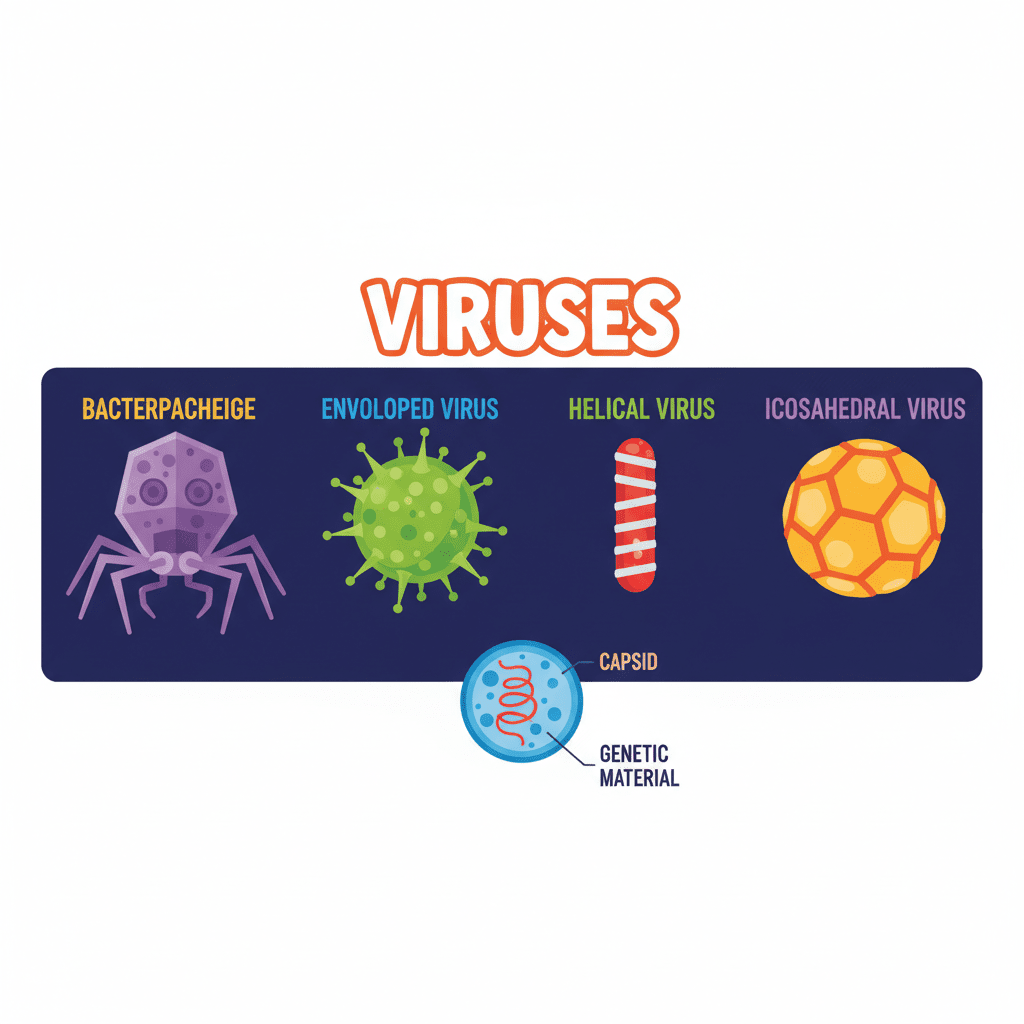
Now, viruses are also super tiny, but they're different from other microorganisms. They can only reproduce inside the cells of other living things, like bacteria, plants, or animals. Viruses can cause common colds and the flu, but also more serious diseases like polio and chickenpox. Other diseases, like dysentery and malaria, are caused by protozoa, while typhoid and tuberculosis are bacterial diseases. So, as we can see, some microbes are our foes, but others can be helpful!