Teacher Explains
✨ Warming Up to Democracy
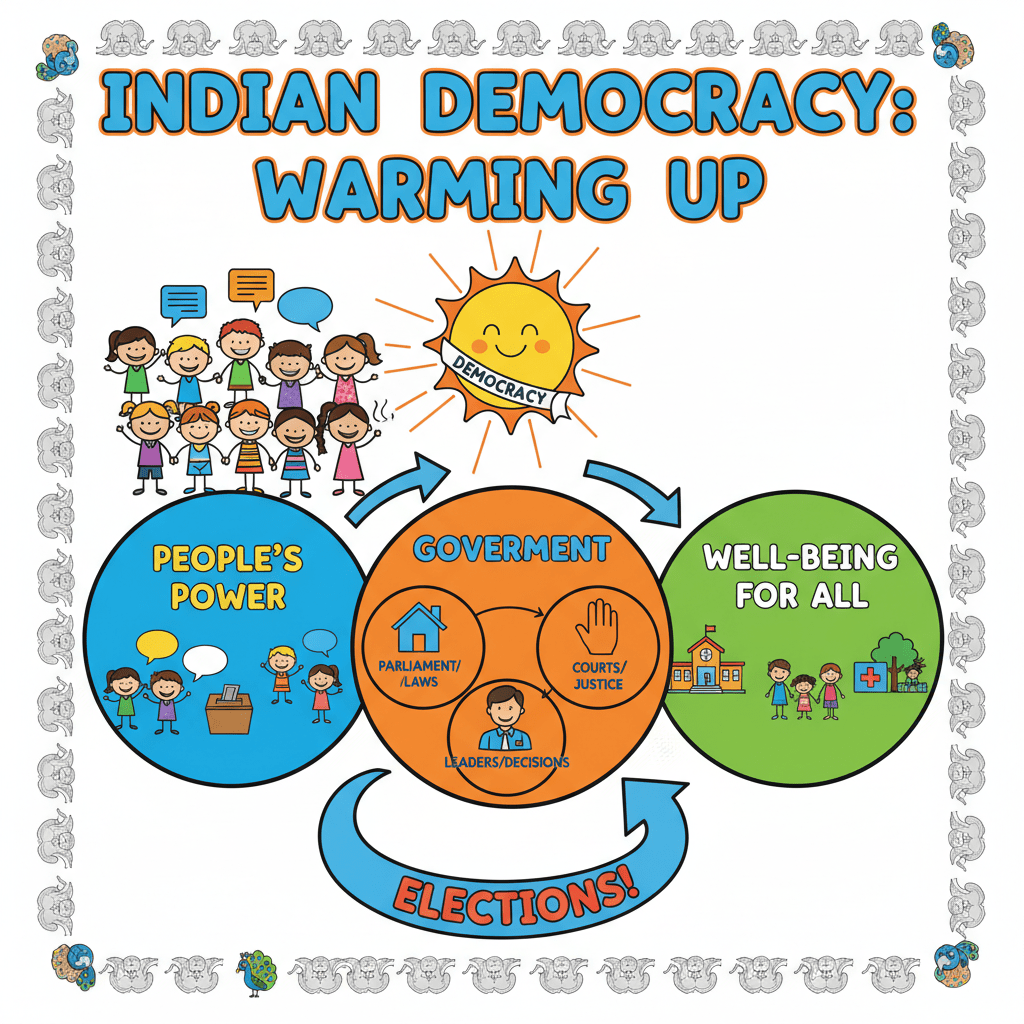
Alright, class, let's dive into the exciting world of democracy in India! Before we get started, take a look at these two images. What do you notice? What does that mark on the index finger during elections mean to you? And does anyone recognize the monument on the old 50-rupee note?
✨ What is Democracy?
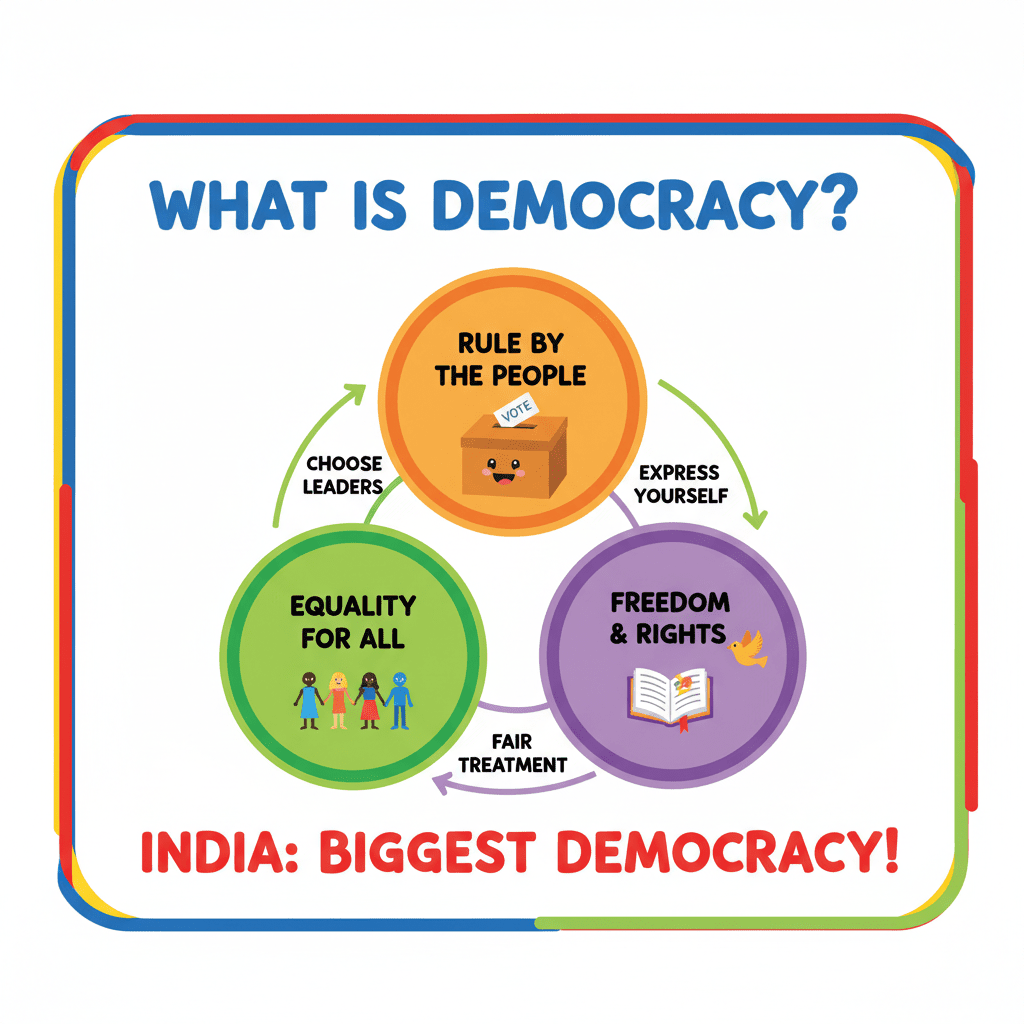
India embraced democracy after gaining independence from British rule. In a democracy, the power lies with the people. We get to choose our leaders through elections. These elected representatives then govern the country according to the laws and rules laid out in our Constitution. If we're not happy with how things are going, we have the power to vote for someone else in the next election. It's a government 'of the people, by the people, and for the people.'
✨ India: The Largest Democracy
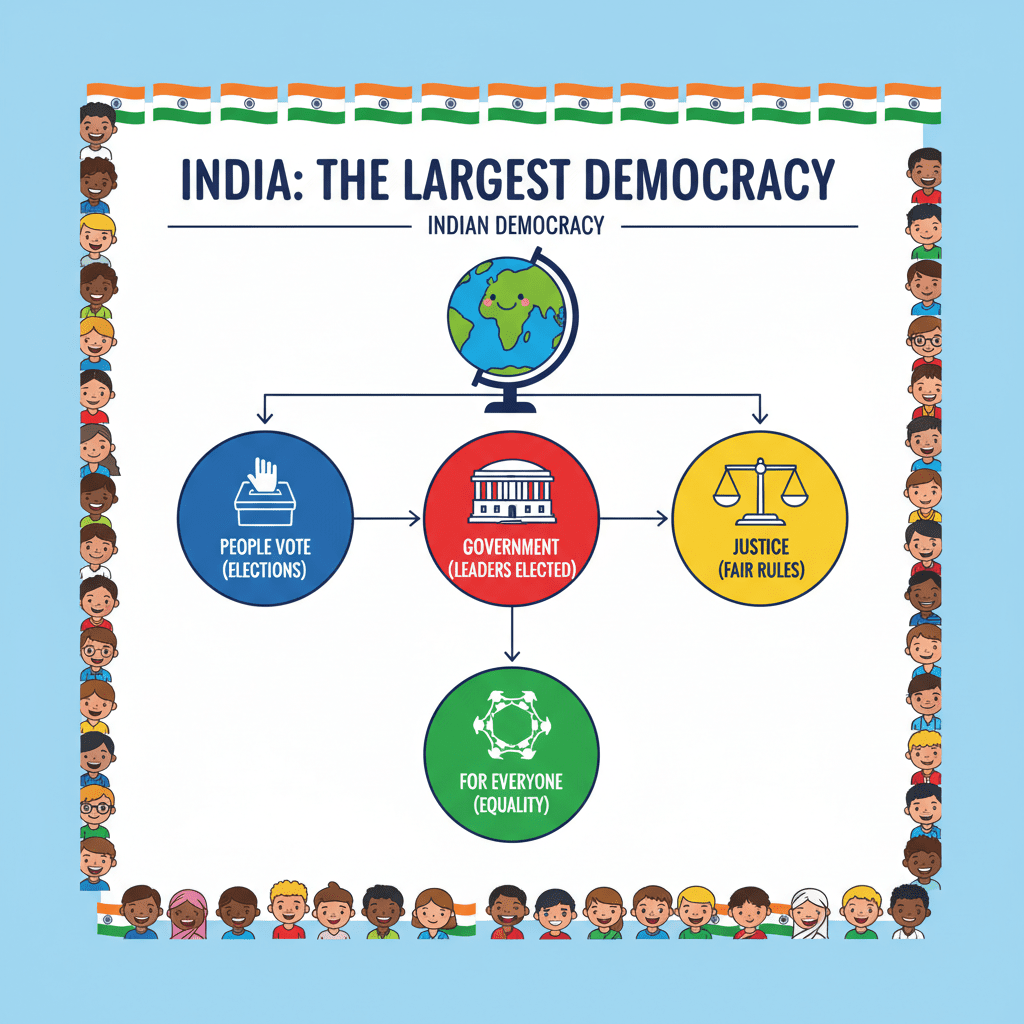
India is the world's largest democracy! Core principles such as Justice, Liberty, Equality, and Fraternity are very important to our democracy. Justice ensures everyone is treated fairly, regardless of gender, race, or religion. Liberty gives us freedom of thought, speech, and expression. Equality means every person is considered equal, and Fraternity encourages us to maintain unity despite our diversity. Our Constitution declares India as a democratic, secular, and socialist country, with the Preamble setting out these core beliefs.