Teacher Explains
✨ Electrical Safety Reminder
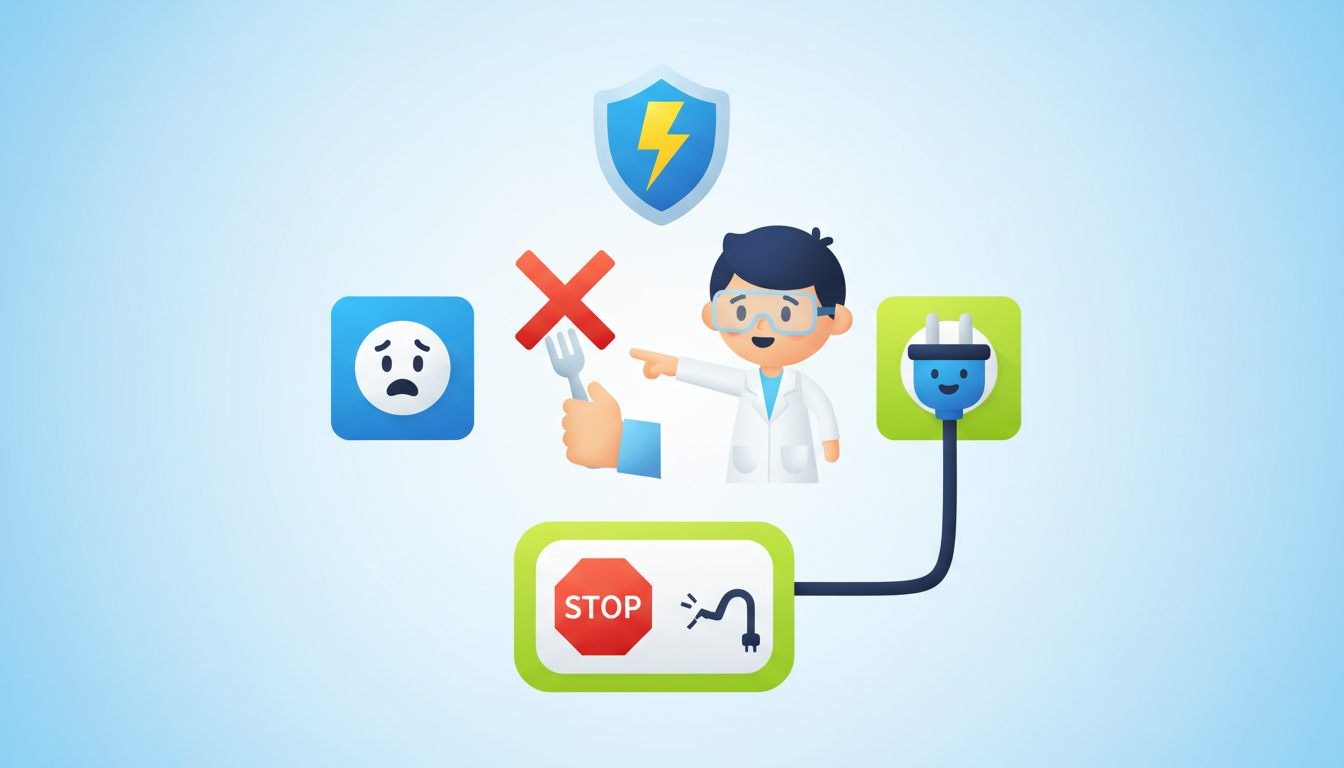
Alright everyone, let's dive into the fascinating world of how electricity interacts with chemicals! You've probably been told to keep away from water when handling electrical stuff, right? That's because water can sometimes conduct electricity, and we need to understand when and why.
✨ Conductors and Insulators
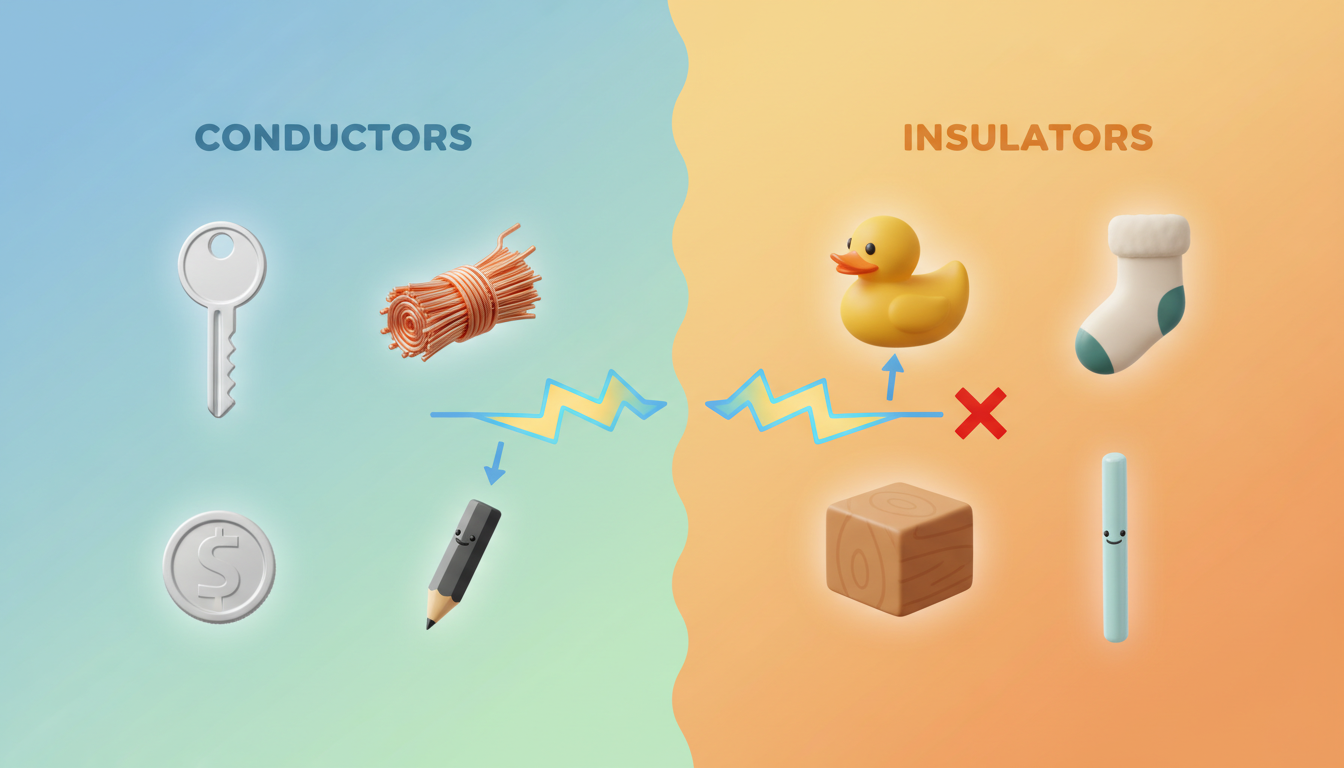
Remember how we learned about conductors and insulators? Conductors let electricity flow easily, while insulators don't. We've tested solids like copper and rubber, but what about liquids? Do you think liquids can conduct electricity? Some can, and it's super important to know which ones and why.
✨ Liquids and Conductivity
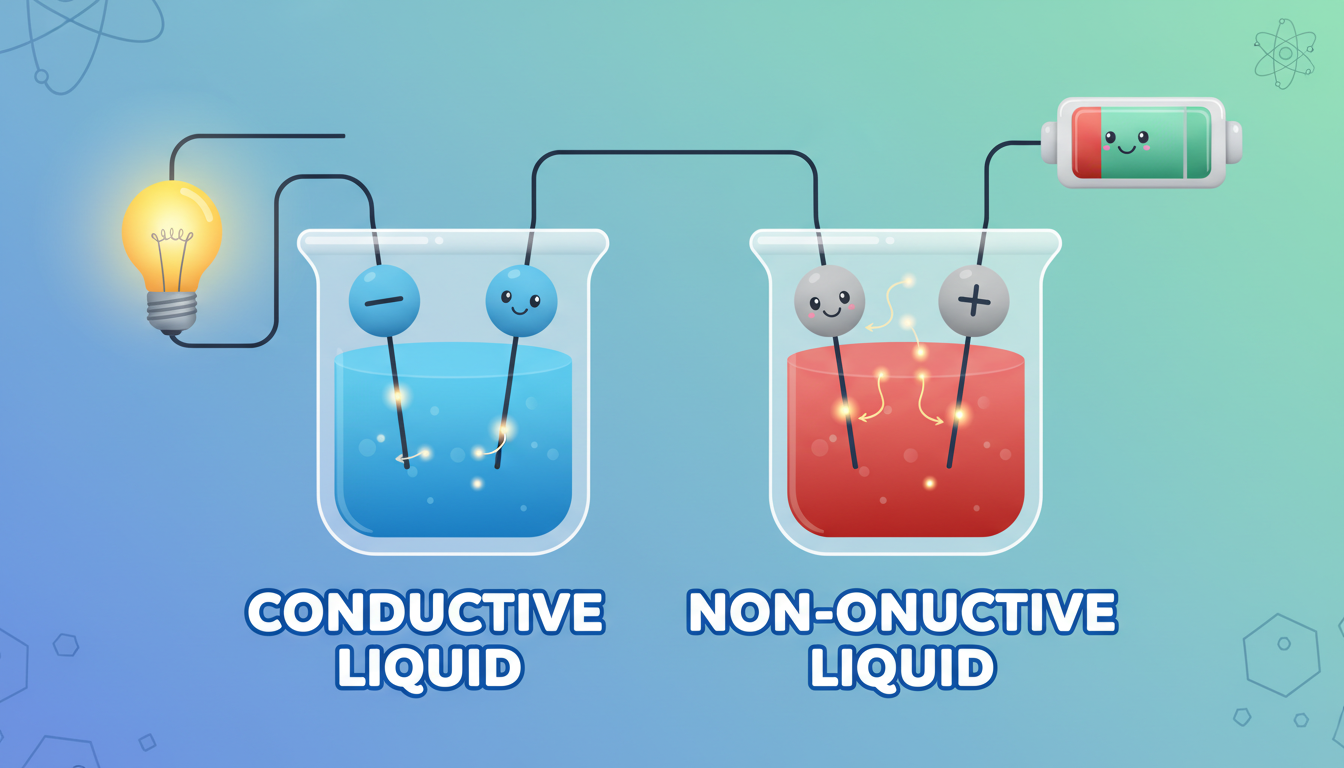
Now, before we start experimenting, a super important reminder: No playing with electricity from the wall or generators! We're only using batteries for our activities, okay? Safety first! Let's investigate which liquids allow electricity to pass through them using a tester, similar to the one we built before.